








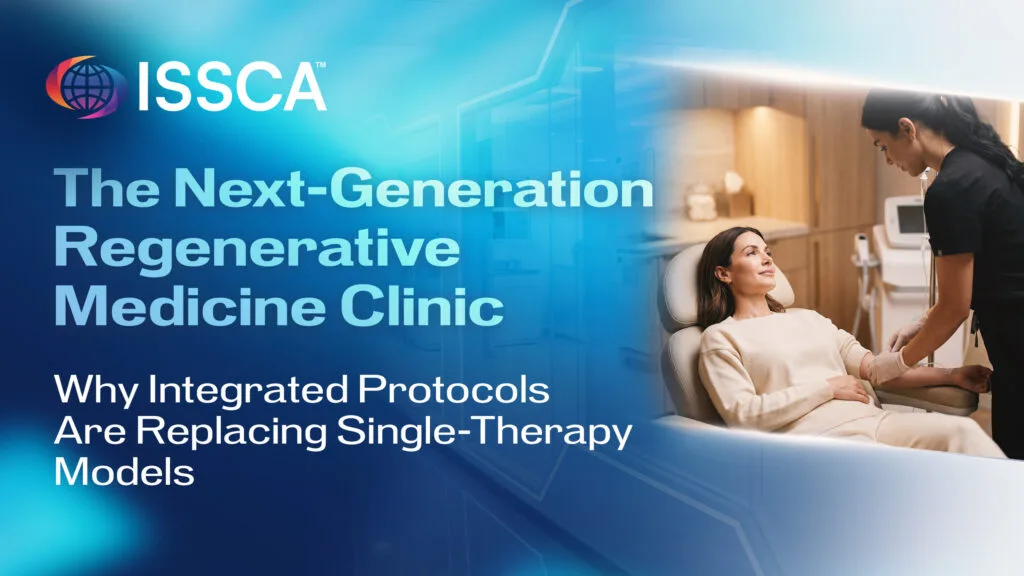
Regenerative medicine is entering a new stage.
For many years, the conversation centered around individual therapies: stem cells, exosomes, platelet-rich plasma, ozone, peptides, or hyperbaric oxygen. Each modality gained attention for its potential role in supporting repair, recovery, immune balance, inflammation modulation, or optimization.
But the future of regenerative medicine is not being built around isolated therapies.
It is being built around integrated clinical systems.
For physicians, this shift matters. Patients are becoming more informed. They are asking better questions. They are comparing clinics across countries. They want to know not only what therapy they may receive, but how the clinical team evaluates them, how protocols are designed, what technologies are combined, and what type of follow-up exists after treatment.
In this new environment, the most forward-thinking regenerative medicine clinics are not positioning themselves as single-procedure providers. They are building complete clinical ecosystems.
That is the difference between offering a therapy and designing a regenerative medicine protocol.
Why the Single-Therapy Model Is Becoming Outdated
In regenerative medicine, no single therapy can be responsibly viewed in isolation.
A patient’s response may depend on many variables, including age, diagnosis, inflammation status, metabolic health, nutrient status, immune function, prior injuries, lifestyle, body composition, and recovery capacity.
This is why modern regenerative medicine requires more than access to one product or one procedure.
A physician may need to consider:
- What is the patient’s current biological baseline?
- Are there inflammatory, metabolic, hormonal, or nutritional factors that may affect recovery?
- Does the patient need local intervention, systemic support, or both?
- Is the goal pain modulation, mobility support, immune balance, recovery optimization, or long-term performance?
- Which therapies may work better together when medically appropriate?
- What support does the patient need before, during, and after the procedure?
These questions cannot be answered by simply offering “stem cells” or “exosomes” as a standalone treatment.
The next generation of regenerative medicine requires physicians to think in systems.
From Procedure-Based Care to Protocol-Based Care
A procedure-based model asks:
“What treatment does the patient want?”
A protocol-based model asks:
“What does this patient need, and what combination of tools may responsibly support that goal?”
That difference is important.
A protocol-based approach may include advanced diagnostics, biomarkers, body composition evaluation, nutrition support, functional medicine, IV therapy, oxygen-based therapies, peptides, cellular therapies, recovery technologies, and follow-up planning.
The goal is not to add more therapies for the sake of doing more. The goal is to create clinical logic.
For example, a patient seeking support for joint degeneration may not only require a local regenerative intervention. The physician may also evaluate systemic inflammation, metabolic health, nutritional deficiencies, recovery capacity, and lifestyle factors that can affect outcomes.
A patient seeking longevity optimization may not need the same protocol as an athlete recovering from injury.
A patient with chronic inflammation may require a different strategy than a patient focused on post-procedure recovery.
This is where regenerative medicine becomes more advanced. It becomes personalized, layered, and medically guided.
The Role of Diagnostics in Next-Generation Clinics
Modern regenerative medicine clinics are increasingly using diagnostics to guide clinical decision-making.
Blood work, inflammatory markers, hormonal panels, metabolic markers, micronutrient assessments, body composition analysis, and other tools can help physicians better understand the patient’s biological context.
Some clinics are also exploring artificial intelligence as a support tool for reviewing patient data, organizing clinical information, and helping physicians design more personalized treatment plans.
AI does not replace physician judgment. It can, however, help structure information and support more precise planning when used responsibly.
This movement toward data-informed regenerative medicine reflects a broader shift in healthcare: patients no longer want generic packages. They want individualized protocols based on their biology, goals, and medical history.
For physicians, this means the future of regenerative medicine will not only depend on knowing the therapies. It will depend on knowing how to evaluate patients properly before applying them.
Why Multi-Modality Protocols Are Gaining Attention
Regenerative medicine clinics are now combining modalities that support different aspects of recovery and optimization.
These may include:
- Stem cell-based therapies
- Exosome-based applications
- Peptide protocols
- Ozone and oxygen-based therapies
- Hyperbaric oxygen therapy
- Red light therapy
- PEMF
- IV nutrient therapy
- Functional medicine
- Nutrition guidance
- Body composition analysis
- Biomarker tracking
- Guided local applications
- Systemic support protocols
Each tool has a different role.
Cellular therapies may support regenerative signaling and tissue repair mechanisms in carefully selected cases. Peptides may support recovery, metabolism, sleep, or optimization goals when prescribed appropriately. Ozone and oxygen therapies may support circulation, oxidative balance, and inflammatory burden in selected patients. Recovery technologies may help create a better post-treatment environment.
The clinical value comes from understanding how and when to combine these tools.
This is why physician education is so important. A physician must understand not only the mechanisms of individual therapies, but also the logic behind combining them safely and responsibly.
The Clinic of the Future Is an Ecosystem
The clinic of the future is not just a treatment room.
It is an ecosystem.
It includes patient education, medical screening, diagnostics, clinical protocols, biologics, technology, recovery support, documentation, coordination, and follow-up.
This type of model is especially relevant in medical tourism, where patients often travel internationally for advanced regenerative medicine. These patients need more than a procedure. They need a coordinated clinical experience.
They need to understand what happens before they arrive, what happens during treatment, and what support exists afterward.
A next-generation clinic must think about:
- Patient selection
- Medical history review
- Informed consent
- Treatment planning
- Product quality and traceability
- Physician supervision
- Nursing care
- Recovery environment
- Follow-up communication
- Long-term optimization
This level of coordination separates a serious regenerative medicine platform from a clinic that simply offers isolated therapies.
Cellular Institute as an Example of the Integrated Clinic Model
Cellular Institute, formerly Cellular Hope Institute, in Cancún, Mexico, represents a useful example of this next-generation clinic model.
Rather than focusing on one therapy alone, the clinic has developed a broader regenerative medicine and longevity platform. Its clinical approach integrates physician-guided evaluation, personalized protocols, functional medicine, nutrition guidance, IV therapy, ozone and oxygen-based therapies, recovery technologies, and advanced biologics.
The clinic also incorporates diagnostic tools such as blood work, biomarker evaluation, body composition assessments, and mineral or nutrient-related testing to better understand each patient’s starting point. This type of evaluation can help physicians design more individualized protocols.
Cellular Institute also reflects the growing role of technology in regenerative medicine. AI-supported tools may assist with organizing diagnostic information and supporting treatment plan development, while the final clinical decisions remain under physician supervision.
In this sense, Cellular Institute demonstrates how regenerative medicine clinics are evolving. The goal is not only to offer stem cells, exosomes, peptides, or oxygen therapies. The goal is to build a complete medical environment where those tools can be combined thoughtfully.
This is the type of model physicians should study as the field continues to advance.
Why This Matters for Physicians
For physicians, the message is clear: regenerative medicine is becoming more complex, more personalized, and more integrated.
Doctors who only understand one therapy may find themselves behind the curve.
The future will favor physicians who understand:
- How to evaluate patient candidacy
- How to interpret biomarkers
- How to combine regenerative tools responsibly
- How to support patients before and after treatment
- How to build or collaborate with proper clinical infrastructure
- How to communicate realistic expectations
- How to avoid overpromising
- How to design protocols instead of selling procedures
This is especially important for physicians trained through organizations like the International Society for Stem Cell Application. Education is the foundation. But implementation requires structure.
A physician may understand the science, but still need access to a clinical platform, trained team, biologics infrastructure, recovery technologies, and patient coordination systems.
That is why collaboration between physician education networks and advanced clinical centers matters.
What Physicians Can Learn From Next-Generation Clinics
Next-generation clinics teach an important lesson: regenerative medicine is not a single product category.
It is a clinical discipline.
A physician who wants to succeed in this field must think beyond the injection. They must understand the full patient journey.
This includes the patient’s health status before treatment, the quality of the biologic product, the chosen route of administration, the use of complementary therapies, the recovery environment, and the follow-up strategy.
Clinics like Cellular Institute show how these elements can exist within one coordinated model.
This does not mean every clinic must offer every modality. It does mean that regenerative medicine physicians need to understand how different modalities fit into broader care planning.
The physician of the future will not simply ask, “Which therapy should I offer?”
They will ask, “What type of clinical ecosystem do my patients need?”
Final Thoughts
Regenerative medicine is moving from isolated procedures to integrated, data-informed, physician-guided protocols.
This shift creates an opportunity for physicians who want to remain at the front of the field.
The future belongs to doctors and clinics that understand personalization, diagnostics, biologics, functional medicine, recovery technologies, and patient experience as part of one connected system.
Cellular Institute offers one example of how a next-generation regenerative medicine clinic can operate: not as a single-treatment provider, but as a premium clinical platform built around personalized care, advanced therapies, coordinated patient support, and responsible medical guidance.
For physicians, the lesson is not to copy one clinic exactly.
The lesson is to understand where the field is going.
Regenerative medicine is no longer just about what therapy is available. It is about how physicians evaluate, combine, personalize, and support those therapies within a complete clinical model.
Doctors who understand this shift will be better prepared for the next era of regenerative medicine.
Medical Disclaimer
This article is for educational purposes only and does not replace medical advice, diagnosis, or treatment. Regenerative medicine protocols are not appropriate for every patient, and outcomes vary. Physicians should evaluate each patient individually and follow applicable medical, ethical, and regulatory requirements in their jurisdiction.